How to Start DJing: What You Learn in a First Lesson
· The Boring Workshops Team · 4 min read
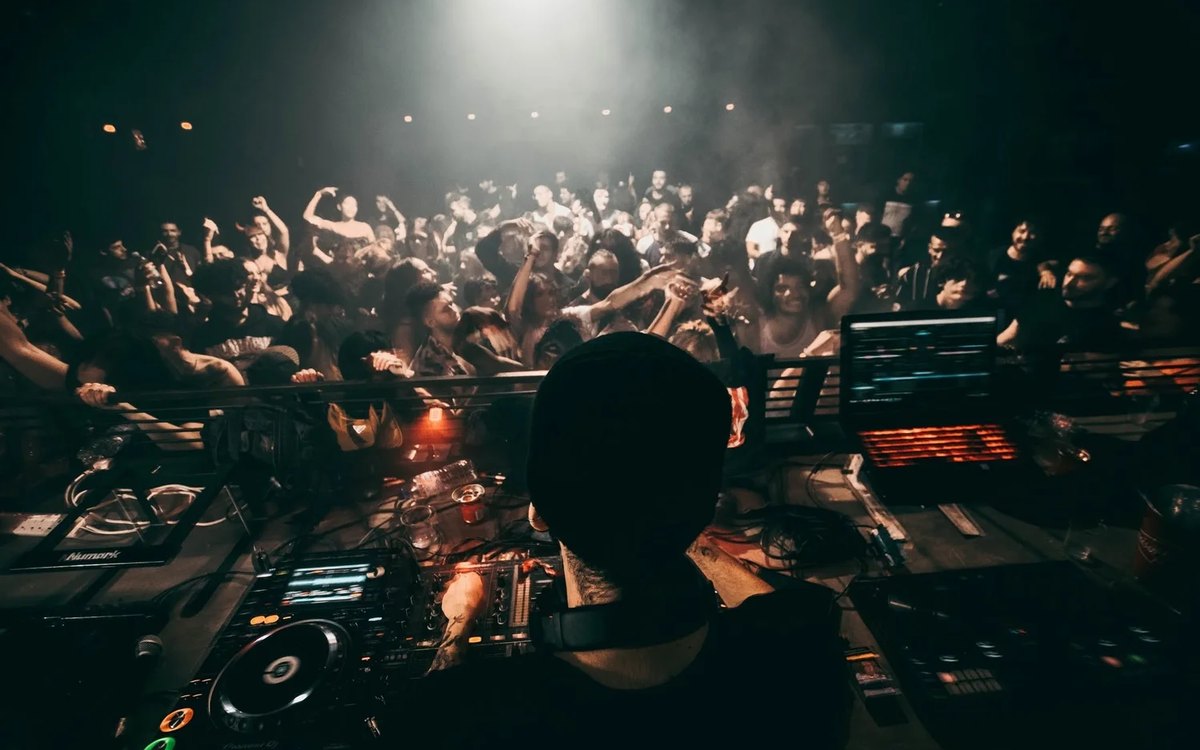
Most people who want to start DJing get stuck at the shop, not the decks. They look at controllers, read reviews for a week, and never mix a single track. Here is the opposite approach. Learn what a transition is first, with gear you already own, and buy things later.
This is roughly what we cover in the first session of DJ Fundamentals with Scythe, written down so you can start tonight.
What you actually need on day one
- A laptop. Any laptop from the last five years.
- rekordbox. Free to download. It is the software most club setups use, so what you learn transfers.
- Twenty tracks you know well. Not a library. Twenty songs where you can feel the beat and know where the chorus lands.
- Headphones. The ones you have.
| Stage | Gear | Cost |
|---|---|---|
| Day one | Laptop, rekordbox, headphones, 20 tracks | €0 |
| After three weeks | Entry level two channel controller | a few hundred euro |
| When you get booked | Club standard decks and mixer | later |
That is it. A controller, decks, a mixer, monitors, all of that can wait until you know you like this.
The three things a first lesson covers
1. Preparing your tracks
Before you can mix, you need to know what you are mixing. In rekordbox you import your tracks, analyse them (the software finds the tempo and the beat grid), and set cue points. A cue point is a bookmark: the first beat, the start of the breakdown, the drop.
This sounds like admin. It is the most important hour of your DJ life. Every clean mix you will ever do starts with a track you prepared properly. DJs who skip this step spend their sets scrambling.
2. Beat matching
Two tracks, two tempos. Beat matching means adjusting one so its beats land exactly on the other's. In rekordbox there is a sync button that does this for you. Use it to begin with, then learn to do it by ear with the tempo fader, because sync fails on badly gridded tracks and you need to hear when it has.
The exercise: play track A. Start track B in your headphones only. Nudge it until the kicks line up. Hold it there for 32 bars. Repeat until it is boring.
3. The basic transition
Track A is playing. Track B is beat matched and cued in your headphones. Over 16 or 32 bars you bring B's volume up while A's goes down, usually using the EQ to swap the bass from one to the other so the low end never doubles up.
Do it badly a hundred times. The hundredth one will be fine. In the workshop, Scythe demonstrates on the decks so you can see what is actually happening in a transition, then everyone rotates through the equipment and mixes two tracks with feedback on each attempt. That feedback loop is the thing YouTube cannot give you: someone saying "you brought the bass in two bars early" while you can still hear it.
How to practise between lessons
Twenty minutes a day beats two hours on Sunday. Pick two tracks. Mix A into B. Then B into A. Then swap one track out. Keep going.
Record your practice in rekordbox and listen back the next day with fresh ears. You will hear the early bass, the trainwreck at bar 12, the moment it worked. Both matter.
A simple progression over three weeks:
- Week one. Prepare twenty tracks. Beat match by ear with sync off. Do one transition until it is clean.
- Week two. Build a 20 minute set: five or six tracks in an order that makes sense energy wise. Mix through it start to finish without stopping, even when it goes wrong.
- Week three. Play that set for someone. In the workshop this is the back to back at the end, where each person transitions from the last track into the next in front of the room. It is terrifying for about four bars.
When to buy gear
Once you have done three weeks of this and still want to, buy an entry level two channel controller. It will feel like cheating after the laptop keyboard. Do not buy club standard decks until you are being booked, and do not buy monitors until the neighbours complain about your headphones.
Why learn in a room rather than online
Everything above you can do alone. What you cannot do alone is know what you are doing wrong. A working DJ hears it instantly and tells you, and the fix sticks because it was your track, your mistake, your ears.
DJ Fundamentals with Scythe runs as three in person sessions a week apart, with real decks, a small group and a back to back to finish. If the dates do not suit, join the calendar list and we will tell you when it runs again.
While you wait, prepare your twenty tracks. You will thank yourself on the first night.
Frequently asked questions
Do I need to buy DJ decks to start?
No. Start with rekordbox on a laptop and your own tracks. Buy a controller once you know you will keep going.
How long does it take to learn to DJ?
You can mix two tracks cleanly after a few hours of practice. Playing a 30 minute set that flows takes a few months of regular practice.
Is there a DJ course in Malta?
Yes. DJ Fundamentals with Scythe is a three session in person course run by The Boring Workshops. Check the calendar for the next dates.
What music should I start with?
Music you already love and know well. Knowing where the drop is matters more than the genre.