Watercolour for Beginners: What to Buy and What to Skip
· The Boring Workshops Team · 4 min read
Walk into an art shop with "I want to try watercolour" and you will leave with €90 of things, half of which will hold you back. Watercolour is cheap to start and expensive to over prepare for. Here is the actual list.
What to buy and what to skip
| Item | Buy now | Skip for now | Why |
|---|---|---|---|
| Paper | 300gsm cold pressed cotton paper, or cellulose for practice | Thin paper | Thin paper buckles and colour dries flat and chalky. Cotton is ideal; cellulose costs about a third as much. |
| Paint | Six student grade pans: warm and cool yellow, red and blue | A 36 colour set | Six colours teach mixing. More colours mean less mixing and slower learning. |
| Brushes | Size 8 and size 12 round, synthetic or synthetic sable mix | A flat brush | Round brushes make lines with the tip and washes with the belly. |
| Water jars | Two jam jars | No extra equipment needed | One for rinsing, one for clean water. |
| Mixing palette | A white ceramic plate | The plastic palette in the set | You can see the colour properly on white ceramic. |
| Kitchen roll | Kitchen roll | No extra equipment needed | For lifting colour and drying the brush. |
| Masking fluid | Not yet | Masking fluid | Useful later, ruins brushes now. |
| Watercolour pencils and brush pens | Not yet | Watercolour pencils and brush pens | Different medium, different lessons. |
| Travel palette, easel and brush roll | Not yet | Travel palette, easel and brush roll | Buy them when you have a reason. |
| Effects products | Not yet | Anything labelled "effects" | Not needed for the beginner's list. |
Total for the real list: about €35 to €50. Half what the shop would have sold you.
Your first three exercises
Do not paint a picture this week. Paint water.
1. The flat wash
Mix a puddle of one colour, more than you think you need. Tilt your paper slightly. Load the big brush and paint a horizontal stripe across the top. Reload, paint the next stripe just touching the bead of water at the bottom of the first. Keep going down the page. You are learning how much water the paper takes and how fast it dries. Do five.
2. Wet on wet
Brush clean water over a rectangle of paper. While it is shining wet, touch a loaded brush of colour to it and watch it bloom. Touch a second colour next to it and watch them meet. This is the thing watercolour does that nothing else does. Do it until you can predict roughly how far a bloom will spread.
3. Wet on dry
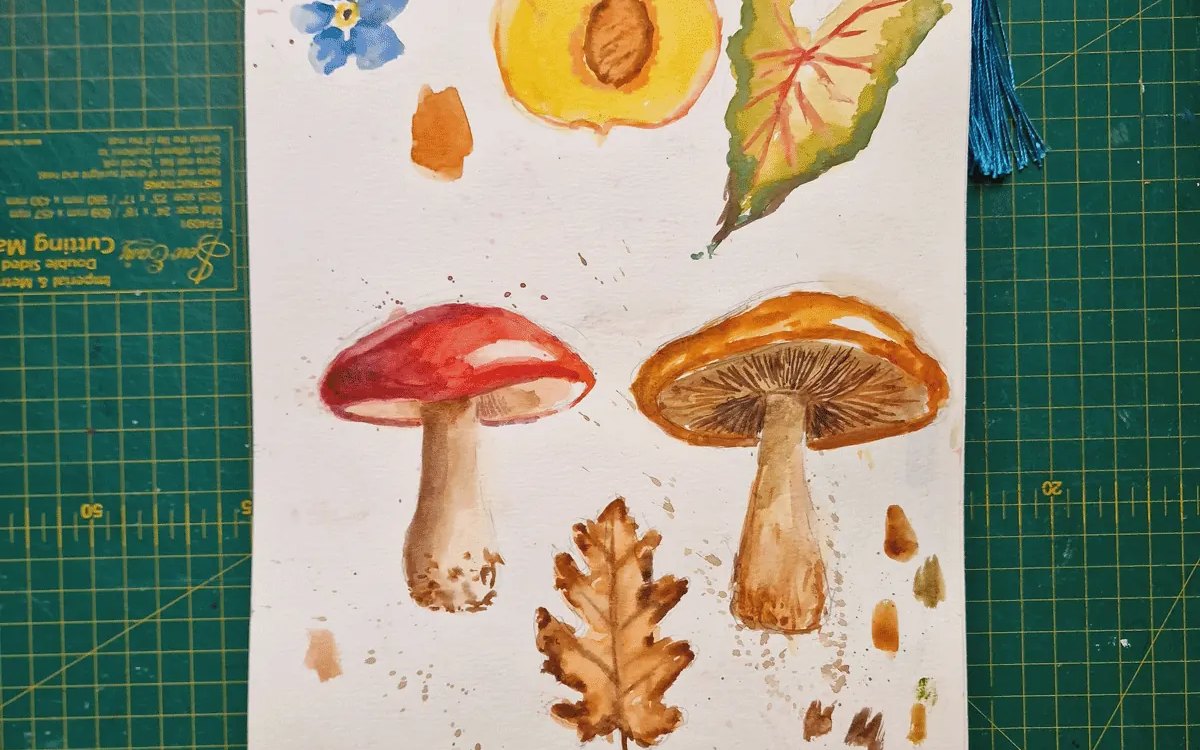
Same colours, dry paper. Hard edges, controlled shapes. Paint a row of leaves with one stroke each: press, pull, lift. This is the stroke that botanical painters live on.
Once those three feel familiar, your first real subject should be a single leaf from the garden or the kitchen. One shape, a few greens mixed from your blues and yellows, wet on dry for the edge and wet on wet for the centre.
The mistakes everyone makes
Not enough water. Beginners paint with a damp brush and get scratchy marks. Load the brush until it drips.
Not enough paint. Then they overcorrect and paint with water that is faintly tinted. Mix a puddle that looks too dark on the plate. It dries a third lighter.
Fiddling. Going back into a wash that is half dry makes cauliflowers and mud. Put the brush down. Let it dry. Then decide.
Expecting control. Watercolour does what it wants for about the first month. The skill is not controlling it, it is predicting it.
Why a live session speeds this up
You can learn watercolour from books and videos. What they cannot do is look at your wash and say "too much water, and your paper was already dry when you went back in". That one sentence, at the right moment, saves weeks.
Botanical Watercolours with Alfie Gatt runs with The Boring Workshops, in person in Malta and live online. Alfie paints plants for a living and teaches the stroke first and the picture second, which is the right order. Check the calendar for the next date, and read how to get back into art after a long break if the blank page is the part that scares you.
Buy the paper. Skip the 36 colours. Paint water for a week.
Frequently asked questions
What is the best watercolour paper for beginners?
300gsm (140lb) cold pressed paper, cotton if you can afford it. Cellulose paper at the same weight is fine to practise on. Avoid anything thinner, it buckles and the colour sits dead on top.
Pans or tubes?
Pans for beginners. They are cheaper, portable, and you cannot squeeze out too much. Move to tubes when you start painting bigger.
How many colours do I need to start watercolour?
Six: a warm and cool yellow, a warm and cool red, a warm and cool blue. Add burnt sienna and you can mix nearly anything.
Is there a watercolour workshop in Malta?
Alfie Gatt runs botanical watercolour sessions with The Boring Workshops, in person in Malta and live online. Check the calendar for the next date.